
In today’s leasing industry where resilience and value creation are critical success factors, BNP Paribas Leasing Solutions stands out as a key player in the “Asset Finance Europe 50 / 2025” ranking, which profiles the top 50 European equipment finance providers. This industry benchmark highlights the innovation capacity, resilience, and growth of European leaders in a demanding economic environment.
A European leader
BNP Paribas Leasing Solutions ranks among the Top 5 lenders by outstandings and also wins the award for Strongest growth in five years (€). This double recognition underscores the strength of its business model, the relevance of its strategy, and the commitment of its teams to support companies in their transition toward a more sustainable and circular economy.
A sustainable future for the leasing industry
In the 2025 report, Pascal Layan, Deputy CEO of BNP Paribas Leasing Solutions, shared his vision for the future of leasing and the challenges the industry must address to meet the expectations of clients and regulators. According to Pascal, the Product-as-a-Service (PaaS) model is set to play a key role in this transition, offering companies a more flexible and sustainable way to access the equipment and services they need.
This innovative model, which prioritizes usage over ownership, enables companies to access cutting-edge technologies without heavy upfront investment, while promoting circularity and equipment sustainability.
According to Pascal Layan, PaaS is now a concrete response to the challenges of ecological transition, economic volatility, and evolving partner and client expectations. It offers:
- For clients: PaaS enables rapid equipment acquisition without tying up capital, while providing full support. It facilitates the adoption of new technologies, optimizes operating costs, and reduces environmental impact.
- For manufacturers: This model paves the way for recurring revenues and stronger customer relationships. It also encourages eco-design by integrating repairability, modularity, and recyclability criteria from the design phase.
- For financiers: PaaS aligns offerings with ESG (Environmental, Social, Governance) priorities, secures financial flows through long-term contracts, and actively supports the circular economy.
A strong commitment to sustainability
BNP Paribas Leasing Solutions is actively committed to promoting more responsible economic models by facilitating access to equipment and supporting its clients in their transition to more sustainable practices. This approach is fully aligned with the European momentum for sustainable finance and the circular economy, as highlighted in the report.
Want to learn more about our solutions or the Product-as-a-Service model? Contact our teams
This article is based on the “Asset Finance Europe 50 / 2025” report published by Asset Finance Policy and Asset Finance Connect, with contributions from Pascal Layan, Deputy CEO of BNP Paribas Leasing Solutions.
(This article was first published by Medical Device Network on 1st October 2025 and is available in English only.)
Andrey Maramzine, chief sustainability officer at BNP Paribas Leasing Solutions reflects on how European healthcare systems can strategically approach green infrastructure financing.
Europe’s healthcare sector faces a dual challenge: delivering high-quality care while managing rising energy costs and reducing carbon emissions. Hospitals and clinics are energy-intensive operations – spending between €2,200 and €3,900 per bed annually on energy. That equates to roughly 2.1–10% of operating expenses, depending on the facility, and represents a significant strain on already tight budgets.
This energy demand not only drives up costs but also contributes to the sector’s considerable carbon footprint. According to the European Commission (EC), health and social work activities accounted for roughly 1.5% of the EU’s final energy consumption in 2023.
For healthcare providers operating within decentralised systems – where levels of investment and infrastructure vary – the scale of transformation needed can feel overwhelming. Ambitious projects, such as the NHS’s largest heat pump installation to date – expected to save 500 tonnes of CO₂ in its first year alone – are powerful examples but often remain out of reach for these more fragmented systems.
Paris, France – 29th September 2025 – New leasing model enables increased access to Epson technology while Epson retains end-of-lease ownership, supporting refurbishment, reuse, and recycling initiatives
Epson today announced a new strategic business model designed to make its technology more accessible for large corporate and public sector organisations, while advancing its sustainability commitments. In partnership with BNP Paribas Leasing Solutions, a European leader in equipment financing, Epson will introduce a comprehensive leasing programme covering its entire product portfolio.
“This is a significant strategic milestone for Epson and will help us better support large scale customer requirements through a more competitive proposition,” says Rob Clark, COO, Epson Europe. “The solution means our customers can access the latest Epson technology without the burden of up-front investment.”
The leasing programme spans Epson’s full range of solutions – from business printing and scanning to projection, retail technologies, industrial print and robotics, including its latest collaborative robots. Customers will also benefit from 360° support delivered through Epson’s partners providing fleet management, maintenance and servicing solutions, enhanced by Epson’s open API to enable integration with partners’ management platforms.
A unique feature of the model is Epson’s retention of product ownership at the end-of-lease, ensuring all equipment is returned for refurbishment, reuse or recycling. This closed-loop approach is central to Epson’s corporate vision and helps prevent products from entering secondary “grey” markets or being disposed of inappropriately.
“We already manage our own innovation and manufacturing facilities,” explained Richard Wells, Head of Market Development, Epson Europe. “Retaining control of products at the end of their life means we can extend resource use, reduce waste and further minimise environmental impact.”
From a financing perspective, leasing offers customers predictable costs, improved cash flow, and greater flexibility. Pascale Favre, MD of the Technology and Lifecycle Solutions business line at BNP Paribas Leasing Solutions, added: “We’re delighted to partner with Epson on this innovative programme. Leasing not only makes Epson’s cutting-edge technology more accessible, it also helps organisations manage risk and align with more sustainable business practices. Together, we’re enabling smarter, more responsible financing models for the future.”
– ENDS –
ABOUT EPSON
Epson is a global technology leader dedicated to co-creating sustainability and enriching communities by leveraging its efficient, compact, and precision technologies and digital technologies to connect people, things, and information. The company is focused on solving societal issues through innovations in home and office printing, commercial and industrial printing, manufacturing, visual and lifestyle. Epson will become carbon negative and eliminate use of exhaustible underground resources such as oil and metal by 2050.
Led by the Japan-based Seiko Epson Corporation, the worldwide Epson Group generates annual sales of around JPY 1 trillion.
ABOUT BNP PARIBAS LEASING SOLUTIONS
BNP Paribas Leasing Solutions offers capital-efficient business equipment financing solutions in key sectors including agriculture, construction, transportation, materials handling, ICT, healthcare, and green tech. Drawing on its 70-year history, its partners and clients rely on its market expertise, asset know-how, and advisory services to propel their growth, transformation, and transition to a low-carbon circular economy. Present in 18 countries across Europe and Türkiye, and employing over 3 000 experts, BNP Paribas Leasing Solutions also offers vendor finance solutions in the USA and Canada in partnership with Bank of Montreal, and in China through a joint venture with Jiangsu Financial Leasing.
In 2024, BNP Paribas Leasing Solutions advanced €16.3 billion in asset finance and presently manages a €40.4 billion leased asset portfolio. BNP Paribas Leasing Solutions is fully owned by BNP Paribas and is positioned within the Group’s Commercial, Personal Banking & Services division.
As climate change intensifies and resources become increasingly scarce, the traditional linear model of produce – consume – discard is no longer sustainable. Industries, governments, and consumers are all searching for smarter, more resilient alternatives.
The circular economy provides that alternative. By maximizing resource efficiency, extending equipment lifespans, and reducing waste, it helps both the environment and the bottom line. According to research from the Ellen MacArthur Foundation, the transition could unlock $4.5 trillion in economic benefits by 2030.
One powerful and often underappreciated enabler of this transition is leasing in the circular economy.
Leasing and the Circular Economy: A Natural Fit
Built on the principle of access over ownership, leasing sits at the heart of circular thinking. Instead of businesses purchasing equipment outright, leasing allows them to use assets for a defined period. At the end of the term, these assets can be recovered, refurbished, reused, or recycled – keeping products and materials in use longer and reducing waste.
According to Leaseurope, leasing supports circular business models by enabling:
- End-to-end lifecycle management of equipment
- Reduced obsolescence, thanks to upgrade and return options
- Improved resource efficiency across manufacturing, logistics, and end-of-life processes
A Powerful Tool for Sustainable Business
Shifting to usage-based business models helps companies become more agile, cost – effective, and environmentally responsible. The World Economic Forum highlights that these models – such as leasing – can cut CO₂ emissions by up to 20% in certain industrial sectors.
Key business advantages of leasing:
- Access to high-performance equipment without large upfront costs
- Lower Total Cost of Ownership (TCO) over time
- Improved ESG performance through smart, sustainable asset management
Leasing transcends traditional financing. It becomes a catalyst for both commercial growth and environmental leadership.
The Role of Leasing Providers
Leasing providers are the central champions of circularity – they orchestrate sustainable solutions across industries.
At BNP Paribas Leasing Solutions, we partner with clients to bring these models to life by:
- Ensuring asset traceability from deployment through return
- Managing “second – life” strategies, including refurbishment and remarketing
- Designing comprehensive, circular solutions with maintenance, upgrades, insurance, and recycling built in
This approach ensures businesses remain competitive while aligning with global sustainability goals.
Conclusion
Leasing is far more than a financing tool – it’s a catalyst for the circular economy. It brings the usage – based model into reality, aligning sustainability with operational efficiency and financial performance.
At BNP Paribas Leasing Solutions, we believe the future of leasing is circular. And we’re already building the solutions today to make that future sustainable, scalable, and commercially successful.
Partner With Us:
Explore how BNP Paribas Leasing Solutions supports businesses in building resilient, circular models for the future.
(This article was published by Healthcare Business International on 14 August 2025 and is available in English only.)
Healthcare generates about 5% of global carbon emissions, with hospitals among the most energy-intensive buildings. Ageing infrastructure, high energy costs, and strict EU decarbonisation targets make upgrades essential, but tight budgets mean the key challenge is not just what to improve, but how to fund it.
For-profit hospitals such as Ramsay Santé, Elsan, and Fresenius Medical Care are increasingly using ESG-linked financing tied to outcomes like CO₂ reduction, patient satisfaction, and staff wellbeing. Private equity firms are also incorporating ESG into healthcare investments. For example, Luxembourg-based CVC Capital Partners arranged a €1 billion loan for Finnish hospital provider Mehiläinen, with the funding conditional on meeting targets to improve care quality and reduce carbon emissions. The firm has also pledged to align a large share of its investment portfolio with science-based emissions reduction goals. Other PE firms, including Ardian, KKR, Nordic Capital, and Primo Capital, have structured ESG-linked loans or funds connecting financing to environmental and social KPIs.
Andrey Maramzine, Chief Sustainability Officer at BNP Paribas Leasing Solutions, says Europe needs innovative approaches to financing green infrastructure. He highlights the Product-as-a-Service (PaaS) model, which enables customers to access products via subscription, for example leasing heat pumps or energy systems through flexible agreements, allowing sustainable upgrades without relying solely on public funding.
HBI spoke with Maramzine to learn more about the PaaS model and explore the investment opportunities in Europe’s green healthcare infrastructure.
(This article was published by Motor Transport on 7 August 2025 and is available in English only.)
Cost is often one of the biggest barriers to entry when it comes to adopting new technology andinvesting in electrifying a fleet. We talk a lot about high up front vehicle purchase prices as well as thecost of adequate infrastructure to support these new eHGVs. Andrey Maramzine, chief sustainability officer at BNP Paribas Leasing Solutions, suggests fleets should be approaching this dilemma in adifferent way by making use of product-as-a-service models. Maramzine shared his views with FreightCarbon Zero on how this alternative model works and what needs to happen to accelerate change.
“As CSO, my role is to act as a coordinator to make the most of the organisation and skills that we canleverage to accelerate the transition of our partners, clients and, at the end of the day, society towardsour key environmental targets, bearing in mind a fair amount of pragmatism,” Maramzine says.
Considering the current fleet decarbonisation landscape, he comments: “With a glass half fullmentality, there’s certainly a lot of room to improve and see some strong growth. On the other hand,with the glass half empty, we may be lagging behind our ambitions.” While Maramzine, pictured below,notes the EU and UK remain committed to environmental targets, more needs to be done to stimulatethe market.
(This article was published by FoodBev Media on 28 August 2025 and is available in English only.)
Neil Pein, CEO of BNP Paribas Leasing Solutions, speaks to FoodBev about how Product-as-a-Service models can support European farmers facing mounting economic pressures, population growth, climate change and sustainability demands – giving them greater access to cutting-edge technology, financial flexibility and a more resilient future. Discover the full article here.
‘Empty shelf syndrome’ has become all too familiar for shoppers across Europe. Shortages are an almost daily occurrence in food supply, from olive oil to honey and, more recently, items like cauliflower and broccoli. But this empty shelf space is more than just a supply chain hiccup: this is a symptom of deeper-rooted problems in farming.
The farming community is no stranger to hardship braving – unpredictable weather, tight finances, rising production costs and the demands of the land. Incomes are dropping, and many are being forced to close shop altogether. The European Union has seen a huge 37% drop in farms since 2005, with 5.3 million farms disappearing over just 15 years.
At the same time, farmers are facing growing heat to invest in more sustainable farming practices, while many are struggling to make ends meet. Tightening regulations, new policy changes and green subsidies are changing ways of working on farms. Many are racing to play their part in building a more sustainable future – and the stakes are far greater than just keeping shelves full.
Featuring insights from Mark Richards, UK Head of Equipment and Logistics Solutions at BNP Paribas Leasing Solutions, this article written by James Huyton first appeared on Farmers Guardian. Discover the full article here.
Financing a future for your farm business
Every business requires capital investment to grow, but with ever-increasing machinery
costs, is it time to revisit the market options beyond the traditional hire purchase route?
Even in a challenging economic climate, farm businesses still require investment to gain efficiencies to both retain and improve their competitive edge.
Payment solutions
With growing equipment costs and often longer payback terms, it is important that businesses not only choose the right piece of
equipment to boost productivity but also choose the most viable payment solution.
Mark Richards, Head of Equipment and Logistics Solutions at BNP Paribas Leasing Solutions helps delve into some of the options agricultural businesses can consider when financing new kit.
The global and UK political playing field has seen some significant changes in recent months, reducing confidence to invest for many small
businesses.
Mr Richards says: “It is not just global economic and political impacts that have affected things. Probably one of the largest impacts of the last 18 months to two years has been weather and the impact on harvest yields.
“In conjunction with that, there have been higher prices driven by inflation and higher prices driven by interest rates on borrowings as
well. So there is a double whammy situation.“
Paris, France – 20th June 2025 – Florence Roussel Pollet has joined BNP Paribas Leasing Solutions effective June 16, 2025, with the view to be appointed President of CNH Industrial Capital Europe. She also joins the Executive Committee of the Equipment & Logistics Solutions International Business Line within BNP Paribas Leasing Solutions. Florence will succeed Mariusz Tarasiuk, who has been appointed CEO of BNP Paribas Leasing Solutions DACH region.
Her appointment will mark a significant milestone for CNH Industrial Capital Europe as it continues to accelerate growth across its core markets. Operating under the CNH Capital and IVECO CAPITAL brands in France, Germany, Austria, Belgium, the Netherlands, Italy, Poland, Spain, and the United Kingdom, the company plays a pivotal role in enabling CNH and IVECO customers to access efficient and flexible equipment financing solutions.
Through its long-standing joint venture with BNP Paribas Leasing Solutions, CNH Industrial Capital Europe offers customised equipment financing programmes including hire purchase as well as finance and operating leases. These solutions play a key role in the sale and deployment of CNH machinery and Iveco Group’s commercial and industrial vehicles, contributing to the growth and strengthened market presence of CNH and the Iveco Group.
Jean-Michel Boyer, Head of Equipment & Logistics Solutions business line at BNP Paribas Leasing Solutions, welcomed Florence’s appointment, stating:
“I am delighted to welcome Florence to the company. Florence’s extensive background in structured finance, international leasing, and commercial strategy will be instrumental in further strengthening our strategic partnership with CNH and Iveco Group. I look forward to working closely with her to leverage her vast experience and drive additional value for our strategic partners and clients across Europe.”
Commenting on her appointment, Florence said:
“I am thrilled to be joining BNP Paribas Leasing Solutions. The company’s deep-rooted partnership with CNH and Iveco Group provides a unique platform for growth. I look forward to working closely with our teams to deliver even more innovative financing solutions and servicing capabilities for CNH and IVECO customers throughout Europe. This role represents an excellent opportunity to leverage our strategic partnership and drive sustainable growth across our core markets while supporting our customers’ operational success.”
Bio
Florence brings over 30 years of international leadership experience in structured asset finance and equipment leasing. Most recently, she served as Chief Commercial Officer at BPCE Equipment Solutions (formerly Société Générale Equipment Finance), where she led the global sales strategy across 14 operating entities and supervised the group’s operations in the United States, Brazil, China, and Hong Kong. She also held executive responsibility for Corporate Social Responsibility within the company.
Florence is a graduate of ESSEC Business School and holds a master’s degree in business law. Her leadership and track record of driving innovation in financing solutions make her ideally suited to lead CNH Industrial Capital Europe into its next phase of growth.
– ENDS –
- New partnership to deliver equipment financing for solar and storage solutions across UK and Germany, with plans for wider European rollout.
Hampshire, UK and Paris, France – 10th June 2025 – Segen, a leading global renewable energy equipment distributor, today announces a strategic partnership with BNP Paribas Leasing Solutions to provide tailored end-to-end financing solutions under the Segen Finance brand.
The new offering will allow commercial and industrial (C&I) end-customers to install solar and energy storage systems with no upfront costs, enabling them to immediately benefit from reduced energy costs and carbon emissions.
Segen Finance will be available exclusively through Segen’s extensive network of approved C&I installers across the UK and Germany initially, with planned expansion across Europe. Installers will be able to offer tailored lease quotes alongside their technical solutions, delivering a seamless experience for end customers.
“This partnership addresses one of the key barriers to clean energy adoption—initial investment costs” says Pascale Favre, Head of Technology Lifecycle Solutions at BNP Paribas Leasing Solutions. “By combining our financial expertise with Segen’s technical knowledge and distribution capabilities, we’re making sustainable energy solutions accessible to more businesses while supporting their cash flow management.”
Nicolas Niedhart, Group Chief Financial Officer at Segen Global, comments: “Our installer network has been asking for integrated financing solutions that make the transition to renewable energy more affordable for their customers. Segen Finance transforms our installers into total solution providers, while allowing their customers to preserve capital for other strategic investments. This partnership represents a significant advancement in accelerating the clean energy transition.”
Key Benefits for Installers:
- Complete solution Provider: Installers can now offer financing as part of their installation quote, becoming a one-stop shop for solar and storage solutions.
- Improved cash flow: Access to Segen hardware at zero cost, enabling installers to free up working capital and scale their businesses more effectively.
Key Benefits for end customers:
- Cash-efficient solution: The entire installed system is wrapped in a single lease agreement with fixed, predictable payments for maximum convenience.
- Capital preservation: Cash reserves can be directed toward other strategic business initiatives.
- Full ownership: Customers gain complete ownership of the solar solution upon completion of the payment schedule.
- Spread capex over equipment life.
- Premium components: All system components will be sourced exclusively from Segen, providing customers with access to audited supply chains, authenticity certifications, and market-leading warranty coverage.
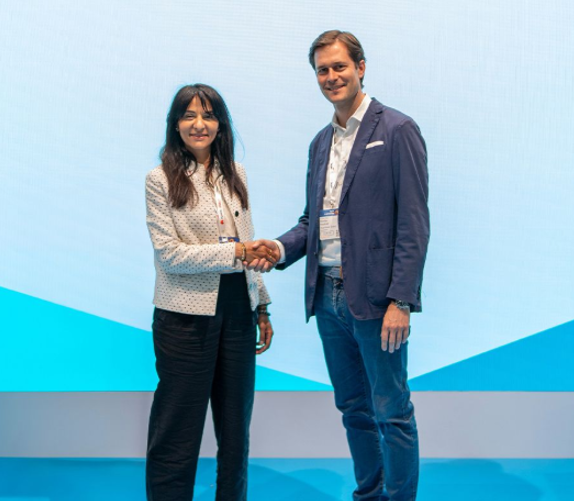
Ouafae Cohin (left), Global Business Development Manager for Green & Tech Market at BNP Paribas Leasing Solutions, shakes hands to confirm the partnership with Nicolas Niedhart, Group Chief Financial Officer at Segen Global (Intersolar Munich 2025).
About Segen
Segen is a leading global distributor of renewable energy solutions, proudly supporting installers and businesses across the UK, Germany, South Africa and North America. Established in 2004 and headquartered in Farnborough, UK, Segen is committed to empowering a sustainable energy future by decarbonising the world, one installation at a time.
Through long-standing partnerships with the world’s leading renewable energy technology providers, Segen offers an extensive product portfolio of more than 10,000 SKUs, including solar PV panels and inverters, battery energy storage systems, heat pumps, EV charging solutions and mounting systems. Segen is also renowned for its expert technical customer support, dedicated country teams, reliable distribution services, and advanced online ordering portal. These capabilities enable a seamless transition to clean energy, reinforcing Segen’s reputation as the trusted partner of renewable energy professionals around the world.
Segen is online at: https://www.segen.co.uk/info/.